Friday, 25 January 2013

Letters, emails and birds


Any email or letter that Marcia receives containing words such as, “I have never written to an author before but . . .” is, of course, a huge compliment. It is while she is writing that they are most important. I suspect that all novelists fall into one of two extremes: pretty unconfident or manically overconfident. I have yet to meet one who fits nicely in the middle – unlike us hacks who are only too happy to graze there (which is why we write such rubbishy novels when we are silly enough to try). All of which is a rather long-winded way of saying thank you to all of you who, without even knowing you are doing it, are – by keeping Marcia's confidence up there somewhere – making a very important contribution to “the next book”.

Those who were following my blogs before we moved will know that we used to get huge numbers birds in the “kitchen garden”. Here things are different. At any one time there are probably no more than four birds to be seen but we have a surprisingly large number of species dropping in and out.

We think the reason is this: over there we were the only “feeding station” for quite a distance and so brought in all the birds in the locality. Here we are one among many for most of our neighbours also put out feed. The result is that we have become just one of the stopping points on what we think is a regular patrol that the birds make around the neighbourhood. Because our kitchen and sitting room are on the first floor, we are level with the trees and so see species on a daily basis that we rarely saw before.


One such is a pair of blackcaps. Only the male has a black head, the mate's is rusty red. Nevertheless she is a charming bird, as you can see. I have yet to take a decent portrait of the male but will share it when that happens.


Then, and this was a great surprise, we discovered that we are on the feeding trail of two small flocks: goldfinches (above) and our old friends the long-tailed tits. Another daily visitor (or possibly visitors – we have only seen one at a time) is a goldcrest. These are even smaller than the wrens (also regular visitors) but a different shape being far less chubby.


The big problem is that these are so often either perching in the foliage or on some point where they are silhouetted against the sky – in both cases taking their portraits is not that easy. What I really want are birds like this collar dove who are willing to sit for a moment on the balcony handrail while I fumble around, find a camera and take a few photographs.


The birds that are really driving me insane are the jackdaws. They get up to the most fantastic (and funny) pranks but usually when I am without a camera as I am walking back from the shops. Then, as soon as I am ready for them, they fly away into the blue yonder and leave me getting bored and very cold.


I rather liked these two flying to their roost as the sun was setting.  Still, they will have to start building their nests soon and then I might have a better chance – or not, of course. We shall have to wait and see.


Friday, 18 January 2013

Oh yes we can!


We have had, for us, a very social week with two evening events.

Wednesday was first night for the village pantomime. It was great fun – despite the fact that I could hear not a word even though the hall does have an induction loop system (which was working quite well but my hearing is now rubbish). To see the youngsters – by which I mean the ones between, say, fifteen and twenty in that rather difficult and self-conscious period through which we all have to pass – prancing around the stage, encouraging the audience to join in and generally fooling around in the great pantomime tradition was wonderful. All very life affirming.

The second event was held last night and was the opening of an extension to the village library. This is housed in the old primary school which closed over twelve years ago when a new, and very splendid, school was built just up the road. Thanks to a huge and very well organised community effort, the buildings were bought by the village and are used by all sorts of groups – including the community library filled with donated books and run by a team of volunteers. Libraries have played a huge part in Marcia’s life and she was thrilled when she was asked to open the library just before we moved to the other side of the moor.

She was just as thrilled to be asked to open the extension and, despite the bitter cold with snow in the forecast, a surprisingly large number turned out to come and listen to her. Maybe it was because the village is in pantomime mode but, whatever the cause, the hall was constantly echoing to the sound of laughter as Marcia talked about the strange world of the novelist. After a brisk question and answer session – and a lot more laughter – Marcia cut the ribbon and as many as could squeeze into the library posed for a group photograph.

Photographs by Brian Dent
While we were asleep, it snowed. We both retain a somewhat childish approach to snow and so it was with a high level of excitement that I pulled back the bedroom curtains. I was not disappointed – the snow covered roof scape with the south Devon countryside in the background was as delightful as I had hoped. Obviously different from the snowy views from our other homes (as you can see from the photographs) it has a charm and beauty of its own. 
The view looking over Dartmoor from our house in mid-Devon . . . 

. . . and from the sitting room of our cottage on Exmoor.

If the visibility had been better - much better - you would have seen
Ugborough Beacon in the background.

One huge plus: where we were, the snow created total isolation which could be quite frightening whilst in this village, where we know so many of those whose snow covered roofs we can see, that is replaced by a great sense of companionship which is extremely comforting.


Friday, 11 January 2013

Writer's block


One of the expressions that we just do not allow in this household is “writer’s block”. Mind you, the fact that we don’t allow the expression does not mean that we do not experience the problem. I suffered from this last Friday and it was not until (and, if I am really honest, out of sheer desperation) that I typed the opening sentence while sitting in Rumour that the juices began, somewhat turgidly, to flow.

Marcia was in like state last Wednesday. Our mantra, “hit the keys, just hit the keys” was failing to do what was needed and so we turned to something else. After all, it would be an absolute waste of a day to sit in from of a blank screen staring at it equally blankly so, instead, I suggested we go up on Dartmoor and visit the scene of the crime or, at least, the places around which the book is being set.

The weather was glorious. The one day of decent sunshine that we have had for many a long week, and so off we went out through Ashburton (comes into the book) and up towards Buckland-in-the-Moor (which doesn’t – well, not yet) and veering off at Ausewell Cross and so up to the junction under Ripon Tor.

“Left or right?”

“How about a spot of lunch at The Dandelion?”

Seemed a reasonable suggestion (yes, in the book) and so I turned right and swooped down passing Haytor Rocks and so to the bottom of the hill where you will find The Moorland Hotel and it’s associated cafĂ©, The Dandelion.
We like this place, it has an assortment of different tables and chairs, including a very comfortable sofa (see foreground) and a rather unusual "wine glass" chandelier. 

They had suffered from flooding (not that surprising when you think about it) and the kitchen was out of action but there was carrot and coriander soup available which, with some hunks of their absolutely wonderful bread, was more than enough – especially as it was followed by a slice of horribly fattening lemon sponge.


Back up the hill – as you can see the sunshine had brought out quite a few people who had climbed to the top of the rocks – and so down towards Widdecombe. Just before the village, Marcia asked me to turn right and up to the Bonehills where we stopped and she went for a walk (see photograph of pensive author chatting to her characters among the piles of granite) before heading home.
Marcia on Bonehill Rocks.

Before you ask, I have no idea where the name comes from.

Yes, it worked. Inspiration having arrived, the next section of the book has been written. And it is raining again. And more rain is forecast for tomorrow. Then, or so they say, we shall see some snow. Well, that would make a difference and if it happens I will try and take some pictures to show you.

Before I go, our thoughts go to all of you in Australia. We hope you are kept safe from the fires raging there and remain so for the rest of the summer. 

Friday, 4 January 2013

Number one of fifty-two


As it happens, I am writing this on my tablet in Rumour, the bistro in Totnes, and I really can't think of a better place to start my 2013 Friday blogs.

At the bottom of Fore Street is an hotel called “The Seven Stars”. Marcia's father often attended meetings at the head office of Staverton Construction (a company that has long since closed and of which he was a director) which, not surprisingly, had its offices in the old mill on the River Dart at Staverton just a few miles up the river from Totnes. He was responsible for their Bristol office which is why the family lived in north east Somerset. However, sometimes during the school holidays he would bring the entire family down when he had to be at some meetings and then they would stay at "The Seven Stars".

In those days there was a large, round table in the middle of the dining room on the first floor and there the entire family – five girls and their parents – would breakfast. Not surprisingly the hotel staff came to refer to the family as “the seven stars”.

So it was that Marcia's first visits to Totnes took place even before she started school – not over-surprising then that this is probably her favourite town. I think it is also mine (but Dartmouth is a fierce competitor, as you would expect). Totnes can honestly claim to be very special. It is difficult to be sure as to how this happened. The acquisition of the Dartington Hall estate – then derelict – in 1925 by Leonard and Dorothy Elhurst may have had a lot to do with it. The next ten years were spent in renovations, including the restoration of the wonderful hammerbeam roof that covers the ‛Great Hall’ (see below) and then something rather marvellous happened: the creation of the Dartington Hall Trust. 

A quick look at http://www.dartington.org/about will give you some idea of what the trust does today. This means that people from all around the world end up in Totnes and I am sure some of the magic that has surrounded Dartington from those early days has rubbed off on the town.

Whatever the reason, Totnes is much loved by free spirits . . .


. . . and has become home to many of them. Some of the shops reflect this: many are devoted to alternative medicines and organic produce. 


Buskers are a common sight (some playing classical music on classical instruments) and people wear just what they want to: dreadlocks stand beside coiffure, ragged jeans against high fashion, peoples of all colours and tongues, men on tricycles with trailers stuffed with merchandise for sale, market stalls . . .


Paul Chapman, here every Friday and Saturday, is putting the finishing
touches to one of his  ducks.

. . . selling a wide range of commonplace and outlandish goods and you see a huge variety of hats (some of which are, frankly, rather bizarre). 


Hats of all sorts - this one worn by Lydia

When Marcia started to write, Mary Wesley and Joan Brady both lived in the town. Both, like Marcia, tended to be somewhat reclusive but both gave her great encouragement as did another local writer who became a friend, James Long. I remember one glorious summer afternoon at Dartington Hall during a Ways With Words festival watching a game of croquet. Mary Wesley and James Long were playing Joan Brady and Marcia. Of the four, the most ruthless and competitive was, somewhat surprisingly, Mary. Not so surprising was that fact that she and James beat the other two by an embarrassingly large margin.

Looking across the table at Marcia - who seems to be deep in conversation with Kit Chadwick (who returns to take part in the book presently in the writing) - the memories keep flooding back. Some are of real people but I must admit that the town is also populated by Miggy and Georgia having come up from Dartmouth by river boat; Gus and Susannah busy at work in their studio; Caroline and Prue enjoying tea and cakes in The Quaker - sadly neither of them nor that café are still with us.

Before I go, an apology to those of you who put up comments last week or have sent emails which have gone unanswered. Not a good excuse, but last week turned out to be even more frantic than usual.

Friday, 28 December 2012

The Last Friday


On this, the last Friday in the year, Marcia and I have been back to Tavistock to meet up with some of our friends in that area. There are two ways of making the journey – by main road or across the moor. Most ‛sensible’ people would take the first option: A38 down towards Plymouth and straight out on the A386 to Tavistock: distance about 28 miles and time in the order of fifty minutes. We, however, habitually take the road over the moor. This is about the same distance but will take you ten minutes longer and there are, for us, huge plus factors.

Even on a day such as today when for most of the journey we were in low lying cloud with very poor visibility it is a magical place and, to us, as beautiful as it is in brilliant sunshine. In some ways it is even more magical and, as often happens when we cross the moor, we started talking about the books: today it was about the way in which Marcia gets inspiration. Often these discussions are centred around places but today we talked about people. It is an absolute fact that not one fictional character in any of her books is based on anyone she knows. I put it like that because in some books she will mention a real person in a specific context. A good example is Patsy in the Post Office in South Brent as recorded in The Courtyard. Patsy, long since retired, was, of course, based on the real Patsy and she still lives in South Brent.

Marcia started the ball rolling by saying she thought she had received more inspiration from books she had read than from people she had met – did I agree? Well, no, I didn’t think I did. I have watched Marcia watching people for over thirty years and I know when she is just being very polite but has allowed her brain to slip into neutral and when all the antennae are waving about and notes are being taken in some dark recess in her mind.

It is body language that she studies when she is at a distance from the people in focus. ‛That man is telling lies,’ she may say. I will watch him attentively but be completely unable to see what it is that she sees – the tilt of a shoulder, perhaps, or the movement of a hand – but, at the same time, I do see that she is absolutely right.

When her ‛prey’ is close to and talking to her, I watch the story that is being told wash over her knowing that she is not the least bit interested in what model her companion’s grandson made during the last art class but fascinated to observe what the person is feeling, what is making them tick. Then the following conversation can be quite unsettling. ‛She is terribly unhappy,’ Marcia will say. ‛How can you tell?’ I ask. ‛You can see it in her eyes, poor darling. She is worried about something, very worried.’ I have to be content with that.

What makes her characters so real to us all? There is no doubt that readers who send us emails and so on all feel that these characters have become personal friends. I don’t really know (and could, I suspect, make a lot of money if I did know) but it is a fact of life that when she is writing she lives in the world she has created and it is ‛real life’ that ceases to be our ‛reality’.

Talking about emails: a huge thank you to all of you who send us emails. They really are terribly important to both of us (needy creatures that we are). We now get so many that some, I fear, do go unanswered. Please forgive us when that happens: it really is because there are too many to cope with and not because they have been ignored.

May I wish you all a peaceful and healthy New Year. Believe me, 2013 will be a glass half full: not one half empty.

Friday, 21 December 2012

Christmas Books by Marcia


A few days ago a guest on BBC Three’s morning programme said that it had become a lifelong habit to read A Christmas Carol by Charles Dickens at this time of the year to get him into the Christmas mood. The opening few sentences of the book were read – ‘Marley was dead: to begin with.’ – and immediately, in my mind’s eye, I saw my own childhood copy of the book, almost A4 in size with rubbed, faded red boards and, inside, the wonderful full-size illustrations by Emil Weiss (two of these below). As I listened I remembered how I, too, used to read the book each year as a pre-Christmas treat, saving it for this special time. I rather liked the two Ghosts, Past and Present, who seemed very jolly, sympathetic fellows, but the Phantom of the Fourth Stave frightened me and the scene described as ‘a den of infamous report, with a low-browed beetling shop’ is still vivid in my mind – as are its owner, the laundress, the charwoman and the undertaker’s man.


When this was first read to me I was too young to grasp the deeper meanings of this passage – perhaps my mother edited out some of the gloomier parts – but I instinctively recoiled from it. Yet the idea of redemption shone through; that life-affirming opportunity to step free from the the limitations that keep us small and mean, as Scrooge does in Stave Five: ‘No fog, no mist . . . Golden sunlight; heavenly sky; sweet fresh air; merry bells . . . Wonderful party, wonderful games, wonderful unanimity, won-der-ful happiness.’


I have the book beside me now as I write and, whilst I was looking for it, I found another book I used to read in the same spirit. This is Christmas at Nettleford by Malcolm Saville. The first chapter is titled ‘Home Again’ and thirteen year-old Elizabeth Ann Langton wakes up in her dormitory bed on the last day of the Christmas term thinking of going home to a ‘large vicarage in a small country town.’ Such a satisfying read, with the Wise Owl bookshop – well, there would have to be a bookshop, wouldn’t there? – its two gangs, the Owlers and the Red Handers (who become friends at the end), the discovery of a valuable antique, which disappears and then turns up again offered as a present at the crib by Elizabeth’s well-meaning small brother during the nativity play – and snow in all the right places! I loved it.

Looking along the shelves I discovered other books my clever, intuitive mother had found for me to read all those years ago: wonderfully strange books, apart from the usual classics. I wonder who can remember Hilda Van Stockum’s Pegeen, Mary Maple Dodge’s Hans Brinker and the Silver Skates. Kate Seredy’s The Good Master. Winifred Letts’ Naughty Sophia. John Masefield’s The Midnight Folk.

This last I first heard serialised on the BBC’s Children’s Hour. It’s theme music was taken from Stravinsky’s Firebird Suite and even now each time I hear it I am back in the past, crouched by the big radiogram waiting to hear more about Kay Harker and his friends, Nibbins the cat and Bitem the fox, and the scary witch Mrs Pouncer with her sneaky familiars, Greymalkin and Blackmalkin.

I have no doubt that all these books, along with many, many others, have influenced my writing, and I thank all those writers who brought such magic to my childhood. Much more than that, the books became my friends; there for me when times were sad or bad or happy.

I’d like to thank you, too, for reading the books that I write, for sending such generous, heart-warming emails to me and for the beautiful Christmas cards. May I wish you all a blessed, peaceful Christmas and say – along with Tiny Tim – and Uncle Theo – ‘God bless us, every one’.

Thursday, 13 December 2012

A winter journey


The other day, we had to drive across Dartmoor to attend a meeting. It was one of those brilliant but cold days and you could see for miles. I'm afraid that it would have needed a better photographer than I am to justice to the sheer majesty of the moor on such days. As we drove up onto Holne Moor, the sun suddenly lit up hills beyond Buckland-in-the-Moor.


I love the contrast between the evergreen gorse in the foreground with the golden glow of the dying bracken on the further hills and the slash of buff yellow where the winter grasses are catching the sun. 


As we drove up from the River Dart at Hexworthy, I spotted this old (and very nearly dead) hawthorn growing in the wall. It may be on its last legs but it is home to some wonderful lichens.


As we turned the next corner, there was an even more spectacular display. This tree remains healthy - you can see the red berries which will, no doubt, provide a decent meal for a passing blackbird.


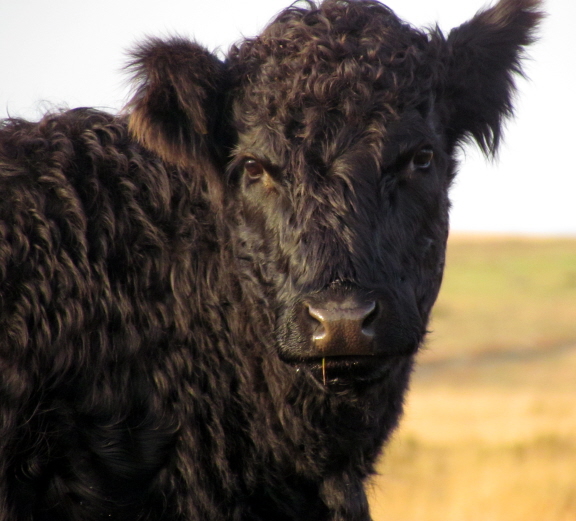
We weren't the only ones enjoying the sunshine. These people will spend the winter up on the open moorland, their thick coats protecting them from the cold and the wind. As you can see from the frost which still remains on the grass up here, it was not the warmest of days.


These cattle are really beautiful, aren't they?


On the way home again, we stopped off for a warming cup of tea at Two Bridges Hotel where, to my surprise, the hotel geese were on parade in the car park. I say to my surprise since I have never seen them here before: they are usually down by the river.


The temperature began to drop quite rapidly, as you can see, and we were very glad to be on the way home.


As we headed south, the mist began to form in the valleys below but from the colour of the sky it seemed likely that the next day would be just as fine. And it was.